
I don’t love high-stakes state testing. I never have. When I became a teacher, I promised myself I would never become someone who “taught to the test.” I wanted rich discussions, critical thinking, authentic writing in my middle school classroom— not endless packets and bubble sheets.
And that’s still true.
But here’s what I’ve learned: if my students are going to take a state test, they deserve to feel prepared. They deserve to understand the format, to know how to manage their time, and to walk into that room confident instead of guessing. I also realized how much some tests, like state language proficiency REALLY matter for kids.
That’s why I approach middle school state test prep strategies differently. Preparation doesn’t mean lowering the bar. It means giving students the tools to show what they already know.
Every year before testing begins, I tell them, “They won’t know how smart you are unless you—” and without fail they finish it: “SHOW THEM.”
That’s the heart of it. This isn’t about the test. It’s about equipping them to perform under pressure.
The Prep Starts Early — But It Gets Intentional
In many ways, test preparation begins in August. We practice close reading. We analyze prompts. We write arguments and narratives. We talk about author’s purpose, theme, and evidence all year long.
But in the month leading up to testing, I get more explicit.
Not frantic. Not louder. Just clearer.
We name the strategies we’ve been using all along. We talk about why they work. We make the invisible visible. That’s what effective state test prep actually looks like in a middle school classroom.
Teaching Multiple Choice Without Apologizing for It
Multiple-choice questions aren’t just about content knowledge. They’re about strategy. And pretending they aren’t doesn’t help students.
When it comes to multiple choice test prep in middle school, we explicitly practice eliminating distractors, slowing down for qualifiers like “most likely” or “best supports,” and going back into the text for evidence instead of relying on memory. We talk about how test writers design wrong answers — and why they’re tempting.
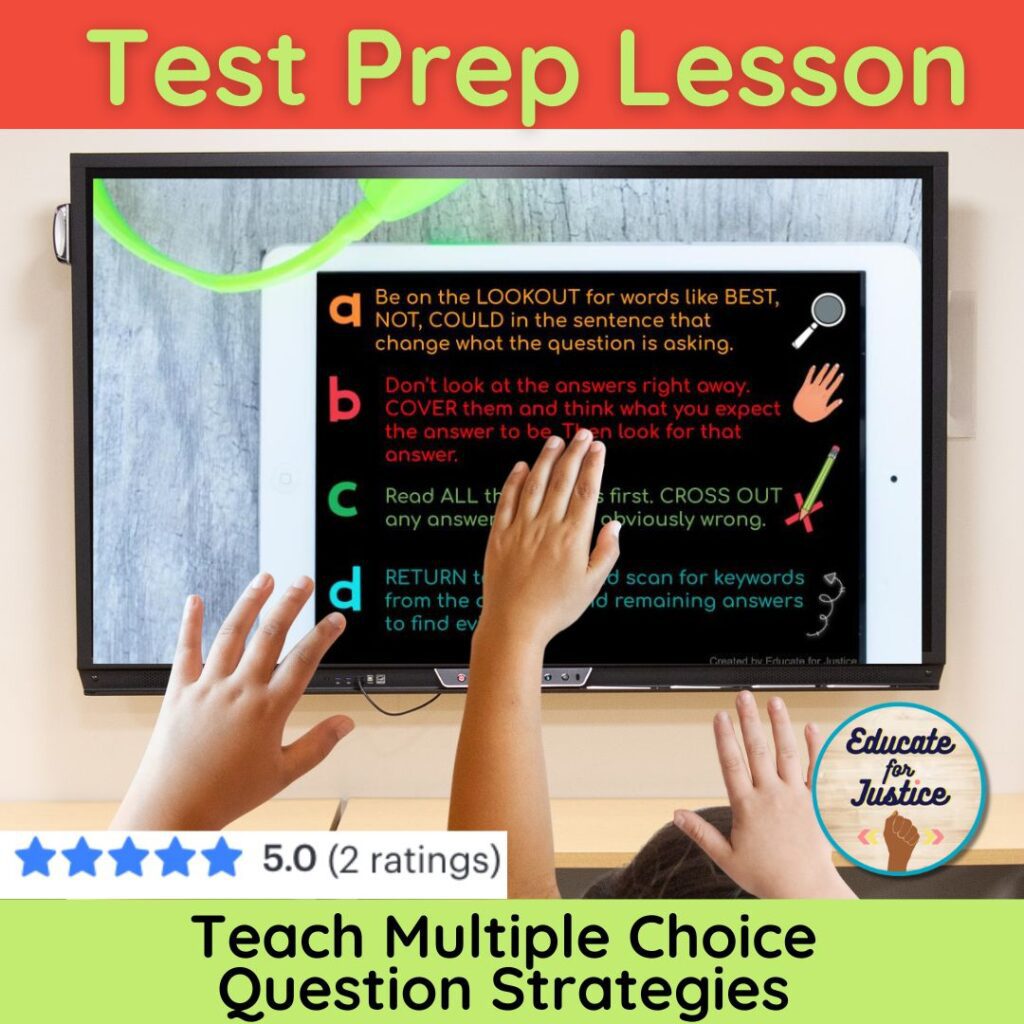
These aren’t gimmicks. They’re transferable skills. They’re the same strategies I use when I sit for certification exams myself.
Teaching students how tests work is not “selling out.” It’s demystifying a system they’re required to navigate.
Training Strategic Use of Scratch Paper
One of the biggest shifts I’ve made over the years is teaching students how to use their scratch paper intentionally.
For our language proficiency exam, there’s a listening component, so we practice taking notes while listening. But we also practice reading and recording the questions before the passage begins. We tell our brains what to listen for. That one habit alone improves focus dramatically.
For writing, the scratch paper becomes something even more powerful: a personalized checklist.
Instead of copying a generic rubric, students reflect on their own patterns. What mistakes do you usually make? Do you forget to elaborate? Rush your conclusion? Misspell the same words repeatedly? Forget to embed evidence? We practice writing this list in advance of test day.
Then, with their fresh scratch paper before them and before they begin even looking at the prompts not he test, they jot down reminders tailored to themselves — the habits they know tend to trip them up.
That small act builds ownership.
They’re not just trying to earn points. They’re actively correcting patterns they’ve identified in their own work. By test day, that reflection is automatic. They know their habits. They know what to watch for.
And that’s a skill far beyond any single assessment.
Making the Rubric Visible
We look at the state rubric together. We compare our writing to it. We identify what earns top scores and what doesn’t.
There is nothing wrong with clarity.
Students should know what strong writing looks like — especially when the stakes are real.
For my language learners, reclassification before high school opens doors. It impacts course placement, elective access, and long-term options. That matters. Pretending the test doesn’t matter doesn’t serve them.
Practicing the Conditions — Without Creating Panic
We practice testing quiet. We practice pacing. We practice sustaining focus for longer stretches.
But here’s something important: I stop aggressive test prep the week before the test.
By then, the skills should already be there. Cramming doesn’t build confidence — it builds stress.
Instead, we shift to lighter reinforcement: vocabulary word searches, quick-write reviews, low-stakes practice. We protect their mental energy because burnout helps no one.
Normalizing the Stress
Test season shifts the energy in a classroom. Because I do weekly student check-ins, I can actually show students that stress trends upward this time of year — and that it’s normal.
We talk openly about anxiety. We watch short guided meditations. We talk about sleep and breakfast and preparation. We name the nerves so they don’t feel controlled by them.
Confidence isn’t pretending you’re not nervous. It’s knowing you’re ready anyway.
This Was Never About the Test
I still believe education is bigger than a standardized assessment. I still believe in joy, critical literacy, deep thinking, and authentic writing.
But I also believe that navigating formal systems is a skill.
Reading prompts carefully. Managing time under pressure. Organizing thoughts clearly. Performing when it counts.
Those are life skills.
Preparing students with thoughtful, balanced middle school state test prep strategies doesn’t mean abandoning what matters. It means refusing to let a format become a barrier to showing what they know.
Because when I say, “They won’t know how smart you are unless you—”
I want them steady, prepared, and fully confident shouting back,
“Show them.”
RELATED POSTS: