I still remember the first time I tried to have a full-class discussion early in the year. I asked what I thought was an engaging, open-ended question, and… crickets. A few confident students jumped in, but the rest of the room stayed silent. It wasn’t that they didn’t have ideas — it’s that they didn’t yet feel comfortable sharing them.
When I surveyed students about why they don’t share with partners in their other classes, it also came back to comfort- they didn’t know or feel comfortable with their seats.
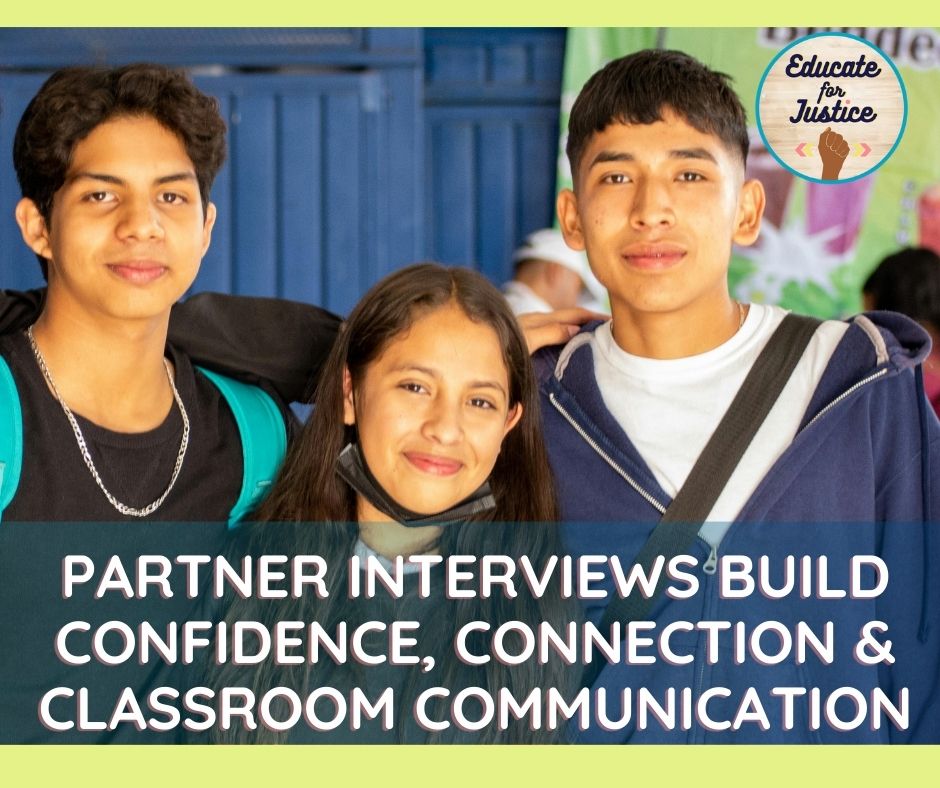
That’s why I lean in on one of my favorite simple-but-powerful routines: partner interviews. They’re low-pressure, high-engagement, and deeply human. And while there are so many academic ways to use interviews — for research, opinion writing, or journalism projects — what I love most is what happens when students interview just to connect.
This post is about that kind of interview — the kind that builds confidence, community, and communication without turning into a research project. The kind that is ideal for breaking in a new seating chart.
Why Partner Interviews Work
Partner interviews create the kind of space where every voice is heard. They shift the focus from performance to connection, giving all students — especially multilingual learners and quieter voices — a way to participate authentically.
Here’s why I keep them in my rotation:
-
- Equitable participation: Everyone gets equal talk time and attention. There’s no hiding in a crowd or waiting for a turn that never comes.
-
- Authentic language practice: Students respond in real time, not from a script. They listen, react, and build on what their partner says.
-
- Community-building: There’s something powerful about students learning small details about each other — siblings, favorite foods, future dreams — that humanizes the classroom.
-
- Support for multilingual learners: Structured prompts, visual supports, and repeated routines help students build fluency while feeling successful.
The conversations might sound simple — but that’s the point. The structure creates safety, and the repetition builds confidence.
Setting Students Up for Success
For partner interviews to work, students need clear routines and modeling.
Before starting, I always model a short interview with a volunteer. We practice:
-
- How to listen actively — eye contact, nodding, smiling.
-
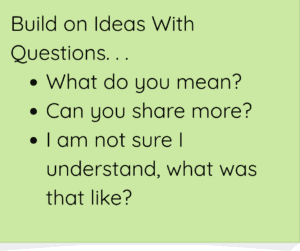
- How to ask follow-up questions (“Tell me more about that!” or “Why do you like that?”)
-
- How to thank their partner when they’re done.
I also provide structured questions for students to ask- these interviews are not freeform- about a topic.
-
- What do you like to do after school?
-
- Who teaches you something outside of school?
-
- What is something that makes you proud?
Finally, I structure time to make sure that some pairs don’t both call done before another pair has gotten through the first person- Only one partner can interview during the first block of time. They know time is still going with a timer on the board or with sand timers.
Keeping it short — four to six minutes per partner the first few times — and repeating it regularly helps peer interviews become a comfortable classroom ritual that we can build onto over time into longer structured conversations.
Authentic Assessment
Partner interviews can absolutely stand alone as oral language practice. Students don’t always need to “produce” something afterward for the experience to have value, I often circulate with my clipboard and take notes on their progress as they go.
That said, if you want to build in light accountability (or an opportunity to practice writing), try one of these extensions:
-
- Partner introductions: Have students introduce their partner to the class, focusing on one interesting detail they learned.
-
- Short reflection writing: Ask students to write a quick paragraph sharing what they learned.
-
- Compare and contrast writing: Invite students to write about how their experiences are similar or different from their partner’s.
These tasks help reinforce listening, note-taking, and writing skills — while keeping the focus on connection, not on gathering data.
Beyond the Classroom Walls
Once students are comfortable with partner interviews, you can expand the concept into community interviews — what my journalism students eventually do.
But the foundation is the same. Students learn to listen, to follow curiosity, and to represent someone else’s story with care. Partner interviews help them build those habits in a low-stakes, supportive environment.
Tools to Get You Started
If you want to try this routine in your own classroom, I’ve created a variety of Partner Interview resources that include:
-
- Printable Interview Questions
-
- Student Instruction Slides
There are options for back-to-school, SEL lessons, ELD instruction, or a variety of contexts for throughout the year.
Final Thoughts
Partner interviews aren’t flashy, but they work — every single time. They turn short conversations into powerful moments of connection and help students develop confidence that carries into every other classroom interaction.
Whether you’re building community, strengthening oral language skills, or just giving students a structured way to connect, partner interviews remind us that communication is learning.
-
- Partner introductions: Have students introduce their partner to the class, focusing on one interesting detail they learned.
-
- Short reflection writing: Ask students to write a quick paragraph sharing what they learned.
-
- Compare and contrast writing: Invite students to write about how their experiences are similar or different from their partner’s.
These tasks help reinforce listening, note-taking, and writing skills — while keeping the focus on connection, not on gathering data.
Beyond the Classroom Walls
Once students are comfortable with partner interviews, you can expand the concept into community interviews — what my journalism students eventually do.
But the foundation is the same. Students learn to listen, to follow curiosity, and to represent someone else’s story with care. Partner interviews help them build those habits in a low-stakes, supportive environment.
Tools to Get You Started
If you want to try this routine in your own classroom, I’ve created a variety of Partner Interview resources that include:
-
- Printable Interview Questions
-
- Student Instruction Slides
There are options for back-to-school, SEL lessons, ELD instruction, or a variety of contexts for throughout the year.
Final Thoughts
Partner interviews aren’t flashy, but they work — every single time. They turn short conversations into powerful moments of connection and help students develop confidence that carries into every other classroom interaction.
Whether you’re building community, strengthening oral language skills, or just giving students a structured way to connect, partner interviews remind us that communication is learning.